Skip to content
  • Our Work
    • Fields
      • Cardiology
      • ENT
      • Gastro
      • Orthopedics
      • Ophthalmology
      • Pulmonology
      • Surgical
      • Urology
      • Other
    • Modalities
      • Endoscopy
      • Medical segmentation
      • Microscopy
      • Ultrasound
  • Success Stories
  • Insights
    • Computer Vision News
    • News
    • Upcoming Events
    • Blog
  • The company
    • About RSIP Vision
    • Careers
  • FAQ
Menu
  • Our Work
    • Fields
      • Cardiology
      • ENT
      • Gastro
      • Orthopedics
      • Ophthalmology
      • Pulmonology
      • Surgical
      • Urology
      • Other
    • Modalities
      • Endoscopy
      • Medical segmentation
      • Microscopy
      • Ultrasound
  • Success Stories
  • Insights
    • Computer Vision News
    • News
    • Upcoming Events
    • Blog
  • The company
    • About RSIP Vision
    • Careers
  • FAQ
Contact

Blog

Automated diagnostic reading of HIV

Human Immunodeficiency Virus is a double-strand RNA retrovirus, which translates into a DNA by reverse transcription in the cell cytoplasm and later integrated into the

Read More
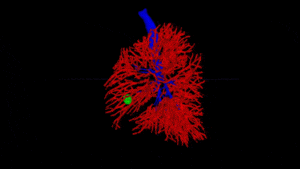
Automated lung segmentation - airways and blood vessels

Lung Segmentation Software

RSIP Vision has built a lower respiratory tract segmentation software using advanced image processing algorithms. This region includes both lungs along with their pulmonary vasculature. This lung segmentation software takes advantage of the structure of vascular and capillary tree in the area as an exploratory tool for lungs segmentation, enabling both diagnosis and planning of invasive interventions.

Read More
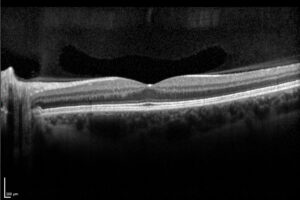
Spectral Domain Optical Coherence Tomography (SD-OCT)

Retinal inner layers segmentation

OCT is the only method that can perform noninvasive imaging with non-ionizing radiation and offering relatively good resolution. That is why it has become a

Read More
Abstract design with connected circles

Statistical pattern discovery in big data

The explosion of data collection techniques and resources is a known phenomenon of the current day and age. Human analysis of such large datasets is
Read More

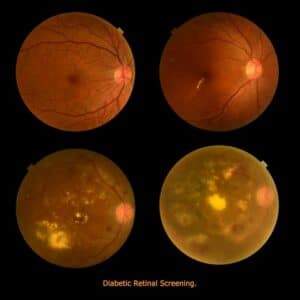
Diabetic retinopathy screening and microaneurysm detection

Diabetic Retinopathy (DR) is a leading cause of blindness, especially among adults and even more among the elderly segments of the population. It is associated
Read More
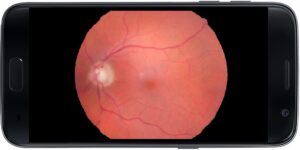
Retinal image with smartphone

Retinal images taken with mobile cameras

Portable cameras able to help ophthalmologists have been a desired solution for a long time. Among the reasons for the need of an additional device
Read More
SD-OCT image of Geographic Atrophy

Geographic Atrophy Segmentation Using SD-OCT

In a previous article, we talked about Geographic Atrophy segmentation in 2D images. This article focuses on how OCT images shed light on the development
Read More
Geographic Atrophy with Drusen

Geographic Atrophy (GA)

Geographic Atrophy (generally called GA) is a case of advanced Dry AMD (Age-related Macular Degeneration) which might lead to vision loss. As a consequence of

Read More

People counting with infrared camera

The FLIR Lepton is a low-resolution LongWave InfraRed (LWIR) camera. The purpose of this article is to explain the main challenges presented by the use


Read More
Traffic lanes detection

Lanes Detection System

As a potentially life-saving solution, even a simple traffic lanes detection system requires the highest accuracy. For that reason, RSIP Vision‘s deep learning experts have developed an ADAS system which solves this challenge. Our specialized team is fully proficient in both image processing techniques and the autonomous vehicles environment. The use of perspective and the calculation of vanishing points are part of the solution that we develop and provide.

Read More
< Page1 … Page14 Page15 Page16 Page17 Page18 … Page25 >

Breakthroughs in biomedical imaging

During the last few decades, the field of biomedical imaging was shaken by major breakthroughs, which have completely changed the way physicians can observe imaging data. For

Read More

Type 2 interval fuzzy sets in pattern classification

In search for a pattern in an image, a video or a signal, one has to consider several sources of bias, noise and uncertainties. Such

Read More

Object feature tracking in natural scenes

Augmented reality (AR), the superposition of virtual graphical models on screen, has been steadily progressing and finds its application in diverse domain from recreational to
Read More

Image Categorization and Retrieval with Fisher Vectors

Testing a set of images for similarity has long been a task of image processing computer vision and machine learning. The plethora of tools and

Read More

Image Features for Classification

Classification problems in image and signal analysis require, on the algorithmic side, to take into account complex information embedded in the data. Images might contain
Read More

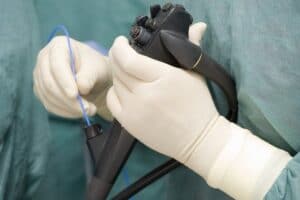
Segmentation and tracking of kidney stones

An affected anatomical region can be treated in a selective and non-invasive manner by localized and contact-free methods such as high-intensity focused ultrasound. Treatment by
Read More
Flexible medical instruments for endoscopic surgery

Instrument tracking for robotic aided surgery

The success of complex fine-scale surgery depends heavily on surgeons’ agility, state of fatigue and their freedom to manipulate miniature instruments in the target organ. Internal organs

Read More

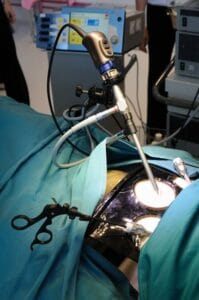
Planning of screw insertion trajectory

Robotic assisted minimally invasive surgery has changed the face of surgery. The use of robotic aids in surgery can be traced back to the mid-1980s,
Read More
Minimally invasive surgery

Minimally Invasive Robotic Surgery

Minimally Invasive Surgery (MIS) has emerged as a paradigm shift in modern surgical practices dating back to the early 1990s. What is Minimally Invasive Surgery?
Read More
Knee orthopedics - sparse set of points

Anatomical surface reconstruction with sparse set of points

Advance navigation techniques in orthopedic surgery allow to construct 3D models of patients’ anatomical parts by matching a surface to an acquired set of data points. As an alternative to costly imaging procedures, ultrasound or fluoroscopic scan can be performed with much reduced costs and hazards. A set of surface points marked by the technician or physician forms then an initial sparse set for anatomical surface reconstruction. Here we show how RSIP Vision’s engineers overcome the challenge of using a sparse set of points to accurately reconstruct a complex 3d surface.

Read More
< Page1 … Page14 Page15 Page16 Page17 Page18 … Page23 >

Get in touch

Please fill the following form and our experts will be happy to reply to you soon

Recent News

RSIP Vision is attending SAGES 2026 in Tampa, FL

RSIP Vision is attending AAOS 2026

RSIP Vision will be at the Spine Summit in Phoenix, AZ

RSIP Vision will be attending the SAGES NBT Innovation weekend

All news
Upcoming Events

SAGES | Tampa, FL

March 25 - 28 2026

AUA | Washington, DC

May 15 - 18 2026

ATS | Orlando, FL

May 17 - 20 2026
Stay informed for our next events
Find quick answers here
FAQ
Follow us
Linkedin Twitter Facebook Youtube

contact@rsipvision.com

Terms of Use

Privacy Policy

© All rights reserved to RSIP Vision 2023

Created by Shmulik

  • Our Work
    • title-1
      • Ophthalmology
      • Uncategorized
      • Ophthalmology
      • Pulmonology
      • Cardiology
      • Orthopedics
    • Title-2
      • Orthopedics
  • Success Stories
  • Insights
  • The company
  • FAQ