Skip to content
  • Our Work
    • Fields
      • Cardiology
      • ENT
      • Gastro
      • Orthopedics
      • Ophthalmology
      • Pulmonology
      • Surgical
      • Urology
      • Other
    • Modalities
      • Endoscopy
      • Medical segmentation
      • Microscopy
      • Ultrasound
  • Success Stories
  • Insights
    • Computer Vision News
    • News
    • Upcoming Events
    • Blog
  • The company
    • About RSIP Vision
    • Careers
  • FAQ
Menu
  • Our Work
    • Fields
      • Cardiology
      • ENT
      • Gastro
      • Orthopedics
      • Ophthalmology
      • Pulmonology
      • Surgical
      • Urology
      • Other
    • Modalities
      • Endoscopy
      • Medical segmentation
      • Microscopy
      • Ultrasound
  • Success Stories
  • Insights
    • Computer Vision News
    • News
    • Upcoming Events
    • Blog
  • The company
    • About RSIP Vision
    • Careers
  • FAQ
Contact

Blog

AI in Diagnostic ERCP

Image Analysis and AI in Diagnostic ERCP
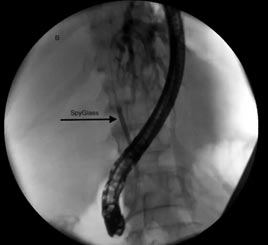
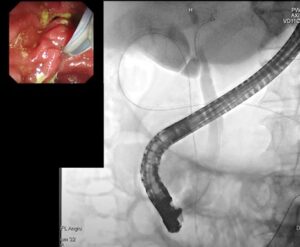
Recent developments in the field of medical image analysis and artificial intelligence (AI) are used to improve the procedural outcomes of ERCP (Endoscopic retrograde cholangiopancreatography). Here is how RSIP Vision develops AI for diagnostic ERCP. Read what we do for enabling 3D Image Reconstruction and Image Registration/Fusion. Learn how strictures detection and classification can provide the physicians with classification scoring and, sometimes, help them avoid unnecessary biopsies during ERCP.

Read More
Type 4 cholangiocarcinoma

Enhanced ERCP tumor assessment using AI
ERCP involves both endoscopy and fluoroscopy on a region with limited access. Accordingly, it poses several challenges for the gastroenterologist performing the procedure: imaging and artificial intelligence are key technologies to solve these challenges. They are used to reconstruct multiangle 2D X-ray images into a 3D image that will help the gastroenterologists in real-time navigation, reducing any complications involved in the navigation process. AI can be trained to accurately classify each tumor found by ERCP and check whether it is cancerous or not. 

Read More
ERCP Gallstones and strictures

AI in ERCP gallstones and strictures treatment

When performing ERCP for stone removal and stricture treatment, the gastroenterologist must overcome several challenges, namely navigation in the region of interest and the choice of the most fitting treatment that must be selected and implemented. AI enables to reconstructing a 3D image from multi-angle X-ray images or ultrasound slices. It is also trained to accurately classify the type of blockage that necessitated the ERCP procedure in the first place, resulting in quicker and more efficient ERCP procedures.

Read More
Robotic Surgery

AI and Robotic Surgery for Renal Cancer

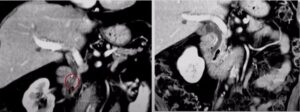
Image analysis techniques and artificial intelligence are leading to radical innovations in renal cancer diagnosis and treatment. In particular, renal cancer robotic surgery. Advanced AI algorithms and computer vision assist in detecting and classifying all kinds of renal diseases, using segmentation and contour detection. This results in improved diagnostic accuracy and enhanced personalized treatment for patients. Moreover, robotic assistance in renal surgeries has gained increased traction in both complete and partial nephrectomies. Surgical planning and 3D reconstruction based on CT and MRI images play vital roles in successful robotic-assisted kidney-related procedures
Read More
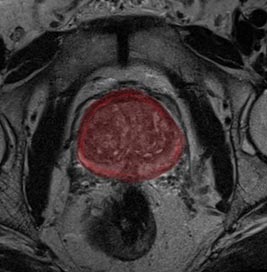
Segmented prostate gland from MRI scan

AI and Deep Learning for Prostate Cancer
Recent developments in the field of deep learning and artificial intelligence (AI) are moving the needle in prostate cancer healthcare. More specifically, it is now possible to use state-of-the-art AI and Deep Learning for prostate cancer detection and treatment. Also prostatectomy, a common treatment of prostate cancer, can benefit from the use of these advanced algorithms to increase procedural success. RSIP Vision’s algorithms provide a solution that can be integrated into all steps of prostate cancer care, thus improving patient outcome.
Read More
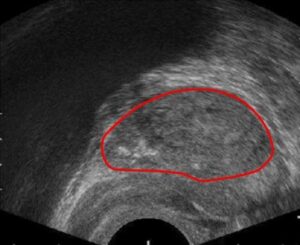
Segmented prostate gland

Image Analysis and AI for BPH

Recent developments in the field of deep learning and artificial intelligence can aid in BPH detection, classification and treatment. Analyzing ultrasound and MRI images, and using deep-learning segmentation tools to process them, gives a baseline for severity classification by the physician. Follow-up scans can be accurately compared to baseline scans for optimal treatment decision. Real-time tracking, 3D image reconstruction, and fusion can all provide better guidance during stent placement and urinary tract dilation. Prostatectomy procedure can be kept within boundaries at all times.

Read More

Improving Urolithiasis Healthcare Using AI and Image Analysis
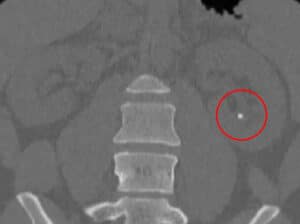
Deep learning and artificial intelligence solutions have recently been developed to improve urolithiasis detection and treatment, leading to enhancing the clinical outcome. Utilizing convolutional neural networks provides accurate stone recognition and segmentation.  Automatic Neural-Networks or Support Vector Machine (SVM) classifiers on kidney stone CT data classify the stones into their subtypes with notable accuracy, assisting and speeding treatment selection. Throughout the full cycle of detection and treatment of urolithiasis, RSIP Vision’s custom AI image analysis algorithms significantly improve urolithiasis procedures and outcome.

Read More

AI for Gastric Cancer Detection

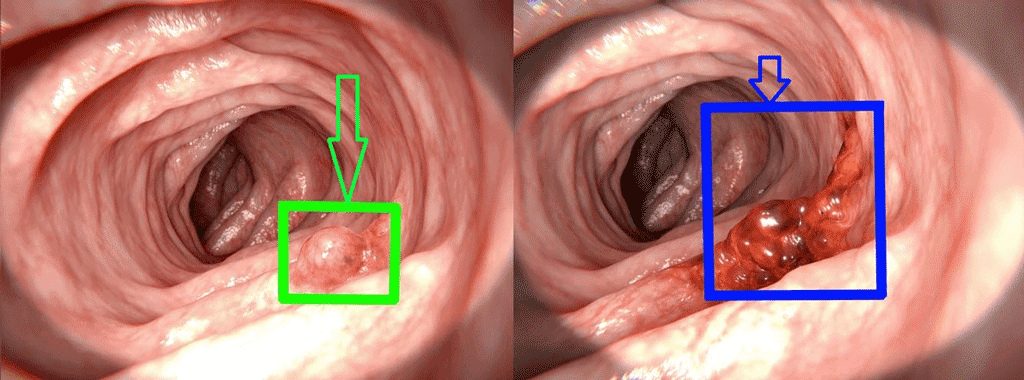
Upper gastrointestinal cancers, including esophageal cancer and gastric cancer, are among the most common cancers worldwide. However, a lack of endoscopists with colonoscopy skills has been identified and solutions are critically needed. The development of a real-time robust detection system for colorectal neoplasms is needed to significantly reduce the risk of missed lesions during colonoscopy. 
Read More
Healthy gut - 3D Rendering

Real time SLAM in Endoscopy Applications
A family of algorithms called simultaneous localization and mapping (SLAM) are able, in real time, to create a 3D map of a scene captured by a camera and calculate with very high accuracy the location of the camera in the scene. As a result, RSIP Vision’s engineers are able to create a precise 3D model of the endoscope environment and calculate its exact location in that model.

Read More

Deep Learning for Cardiac Ultrasound (Echocardiography)
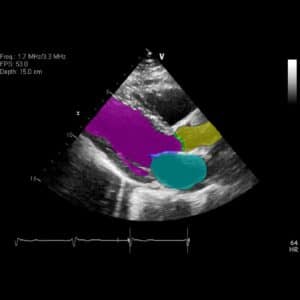
Despite the importance of echocardiography in the diagnosis and treatment of serious cardiac illness, this imaging technology faces two main challenges: Image quality and image assessment. RSIP Vision uses deep learning to enhance both, making it easier for physicians and researchers to interpret findings. As a result, our method resolves user variability, accuracy and efficiency in cardiac ultrasound with advanced, deep learning neural networks. Learn how we do it on our software.

Read More
< Page1 … Page3 Page4 Page5 Page6 Page7 … Page25 >
Autonomous self-driving car showing Lidar

ADAS sensors: 2. LiDARs

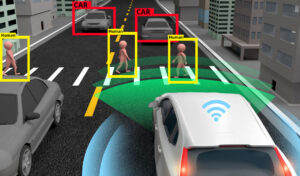
This is a series of three articles about sensors used by the automotive industry to allow perception on autonomous vehicles and increase security for all. Read about RGB cameras, LiDARs and Radars. RSIP Vision and its engineers have a rich experience in sensors for ADAS systems and for autonomous driving.

Read More
RGB Cameras

ADAS sensors: 1. RGB cameras

This is a series of three articles about sensors used by the automotive industry to allow perception on autonomous vehicles and increase security for all. Read about RGB cameras, LiDARs and Radars. RSIP Vision and its engineers have a rich experience in sensors for ADAS systems and for autonomous driving.

Read More
Multiplex

Multiplex IF Analysis

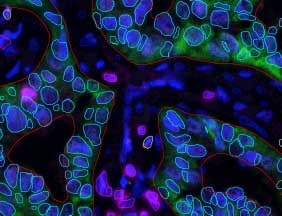
The use of deep learning for analysis of multiplex IF has allowed for a much greater accuracy level for the correct phenotypic classification of cells. When combined with RSIP Vision‘s advanced nuclear detection capability, it allows for the simultaneous analysis of multiple florescent markers on a cell by cell basis. This tool is well suited for multiple applications, especially when using multiple markers to characterize distinct cell populations such as in immune-oncology and IBD.
Read More
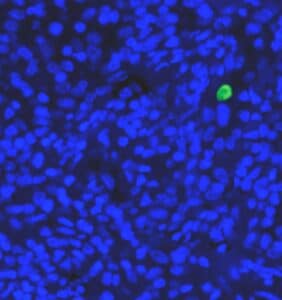
CTCs - Circulating Tumor Cells

Circulating Tumor Cells (CTCs)

Circulating tumor cells (CTCs) are rare cancer cells that originate from a tumor and then travel through the patient’s blood or lymphatic system. CTCs have
Read More
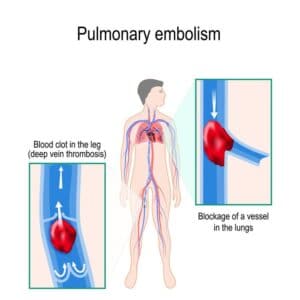
Pulmonary embolism

Detecting Pulmonary Embolism from CT Scan

Pulmonary embolism is a very dangerous condition, which happens when a clot of blood moves from somewhere (generally the legs) to the heart and then
Read More

Coronary Arteries Segmentation

Coronary artery disease (CAD) or ischemic heart disease (IHD) has become one of the most common causes of morbidity and mortality worldwide. Patients who suffer
Read More

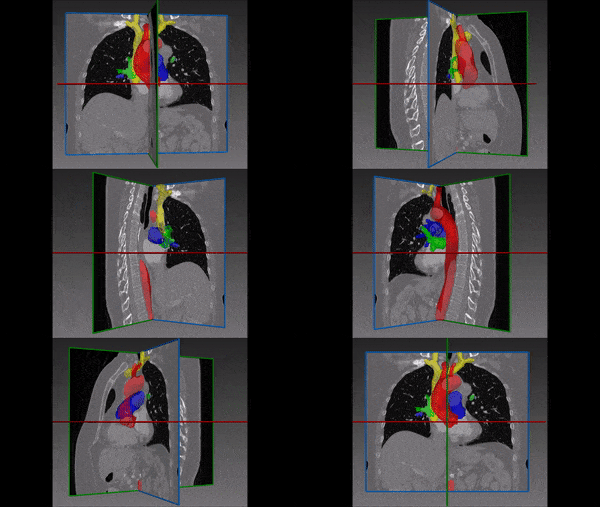
Great Vessels Segmentation with Deep Learning

The great vessels conduct blood to and from the heart. These vessels include the aorta, superior and inferior vena cava, pulmonary arteries and pulmonary veins.
Read More
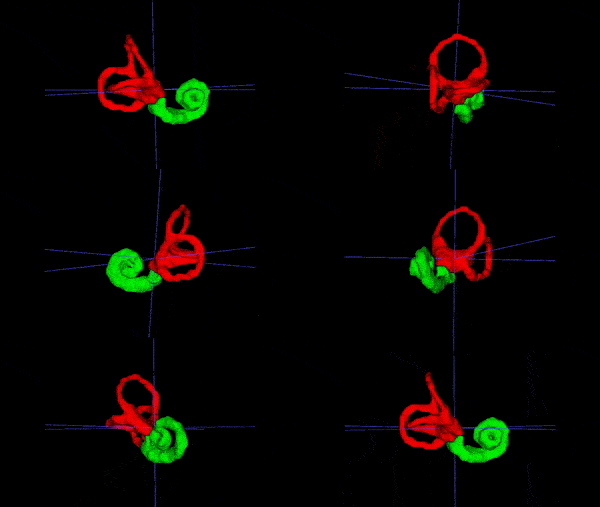
Inner ear segmentation

Middle and Inner Ear Segmentation with Deep Learning

Ear pathologies are common in all age groups, and are one of the leading causes for visiting a doctor. In most cases, proper diagnosis can
Read More
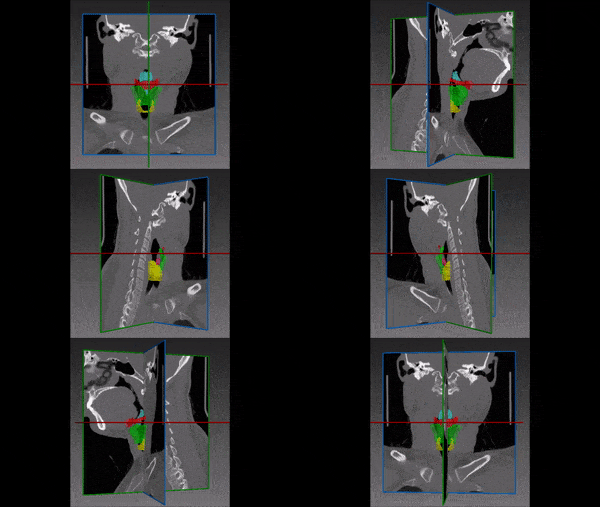
Larynx

Larynx Segmentation with Deep Learning

The larynx, also known as the voice box, is a triangular structure in charge of important functions including breathing, voice production and supplying protection to
Read More
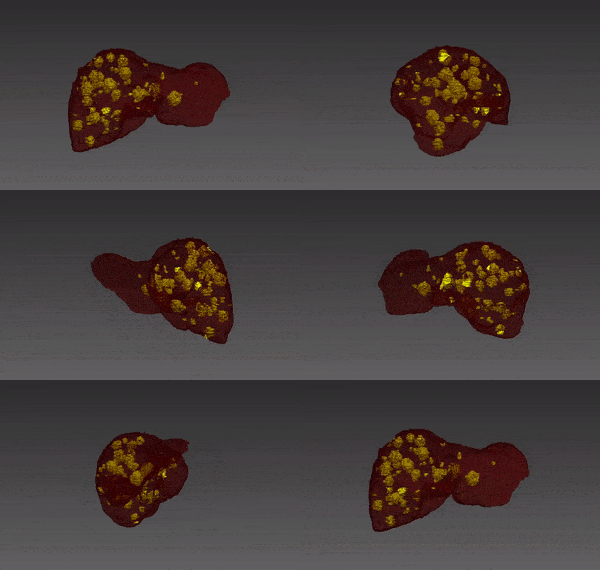
Liver and tumors

Liver Tumor Segmentation with Deep Learning

Liver tumors, also known as hepatic tumors, are quite common and some poses a grim prognosis. Therefore, early detection and diagnosis has become a main

Read More
< Page1 … Page3 Page4 Page5 Page6 Page7 … Page23 >

Get in touch

Please fill the following form and our experts will be happy to reply to you soon

Recent News

RSIP Vision is attending SAGES 2026 in Tampa, FL

RSIP Vision is attending AAOS 2026

RSIP Vision will be at the Spine Summit in Phoenix, AZ

RSIP Vision will be attending the SAGES NBT Innovation weekend

All news
Upcoming Events

SAGES | Tampa, FL

March 25 - 28 2026

AUA | Washington, DC

May 15 - 18 2026

ATS | Orlando, FL

May 17 - 20 2026
Stay informed for our next events
Find quick answers here
FAQ
Follow us
Linkedin Twitter Facebook Youtube

contact@rsipvision.com

Terms of Use

Privacy Policy

© All rights reserved to RSIP Vision 2023

Created by Shmulik

  • Our Work
    • title-1
      • Ophthalmology
      • Uncategorized
      • Ophthalmology
      • Pulmonology
      • Cardiology
      • Orthopedics
    • Title-2
      • Orthopedics
  • Success Stories
  • Insights
  • The company
  • FAQ