Detection and quantification of bone cancer
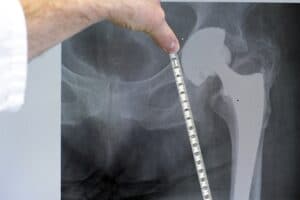
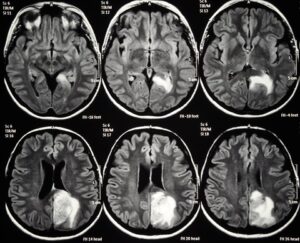
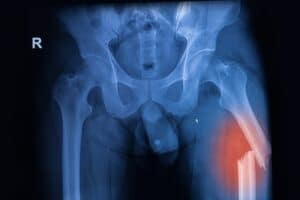
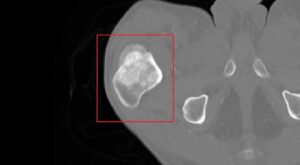
Metastatic bone malignancies arise following prostate cancer (80% of cases, with 3% five-year survival rate), breast cancer (with no cure) or lung cancers (with 11% two-year survival rate). Bone metastases affect more than 400,000 people annually in the United States with frequent occurrences among patients undergoing irradiation and secondary effect to other treatments. Detection of skeletal metastases has a major impact on devising treatment strategies and prognosis. The solution offered by RSIP Vision produces 3D surfaces of bones and other skeletal-related structures to detect and quantify primary and metastatic bone cancer.
Read More

Point and surface registration in orthopedics

Point and surface registration enable computer vision and image processing to improve surgical orthopedy practices and affect surgery outcome recovery. Bringing point and surface registration in the field of orthopedics, computer vision and image processing hold the potential to improve surgical practices and affect surgery outcome to favor the benefit of patients and fast recovery. Measurement accuracy (within less than 1 mm) is a strict constraint to computer-vision-based algorithms.
Read More

Animal Health Monitoring
Animal Health Monitoring – Body Condition Scoring For a long time, farmer’s objective was to get the highest milk production from their cows, while feeding them

Phenotyping
Phenotyping Phenotyping, in general, is a process by which different traits of a plant, such as nitrogen consumption, yield, and dimensions, are assessed. Knowledge regarding

Automatic human action recognition in videos
When a video uploader disregards adding tags and categories, online video hosting platforms encounter what is called the new item problem. This can be solved by utilizing visual analysis of videos and images: first, by filtering videos into recognizable objects and combining human action segmentation and recognition; later, by training Multiclass Support Vector Machines to assign labels to detected actions in the temporal domain of videos.
Read More

Automatic semantic tagging of images
Sites containing huge amounts of content must necessarily recommend only a narrow and relevant list to users. Recommender systems can be seen as tool to automatically generate personalized search preferences, with the purpose of keeping the balance between monetized targeted suggestions and satisfactory user experience. Automatic semantic tagging helps them do just this.
Read More

Automatic video categorization of new item
Online video hosting platforms utilize a variety of methods for content discovery. Recommender systems allow users to face the huge amount of information offered to their view: recommendation algorithms analyze the video and automatically suggest a confined set of adequate tags to the uploader. Alternatively, the system learns to automatically assign tags to videos without any user intervention.
Read More

Visual Search and Video Recommendation
Here is a simple explanation of how a Recommender System work. Take YouTube as an example: a huge quantity of videos needs to be processed, classified, tagged and ranked by users or by an automatic algorithm, before it can be used by the Recommender system. Learn how users are classified by filtering (either collaborative, content-based or hybrid) and videos are ranked by similarity.
Read More

Vehicle Localization with Lane Tracking
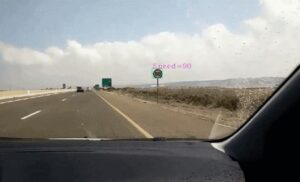
More than 1 million people killed and 50 million injured on the roads every year make driving safety a subject of the highest importance. ADAS technologies are at the forefront of this fight: a further proof of that is our car detection and localization solution enabling to detect a danger, create an alert, avoiding the obstacle or – in the worst case – minimizing damage. This system based on machine learning follows the highest quality standards and can save lives on the road.
Read More

Pedestrian Detection with Machine Learning
One of the most challenging tasks of ADAS operating in urban or rural environment is the detection of pedestrians. When human behavior can sometimes be unpredictable, ADAS systems can be programmed to track pedestrians and predict with high levels of accuracy their orientation and intentions: human lives are at stake and our software is key to save them. RSIP Vision‘s algorithms do not save lives only in medical applications, but also in automotive safety systems!
Read More