



 31 / 56

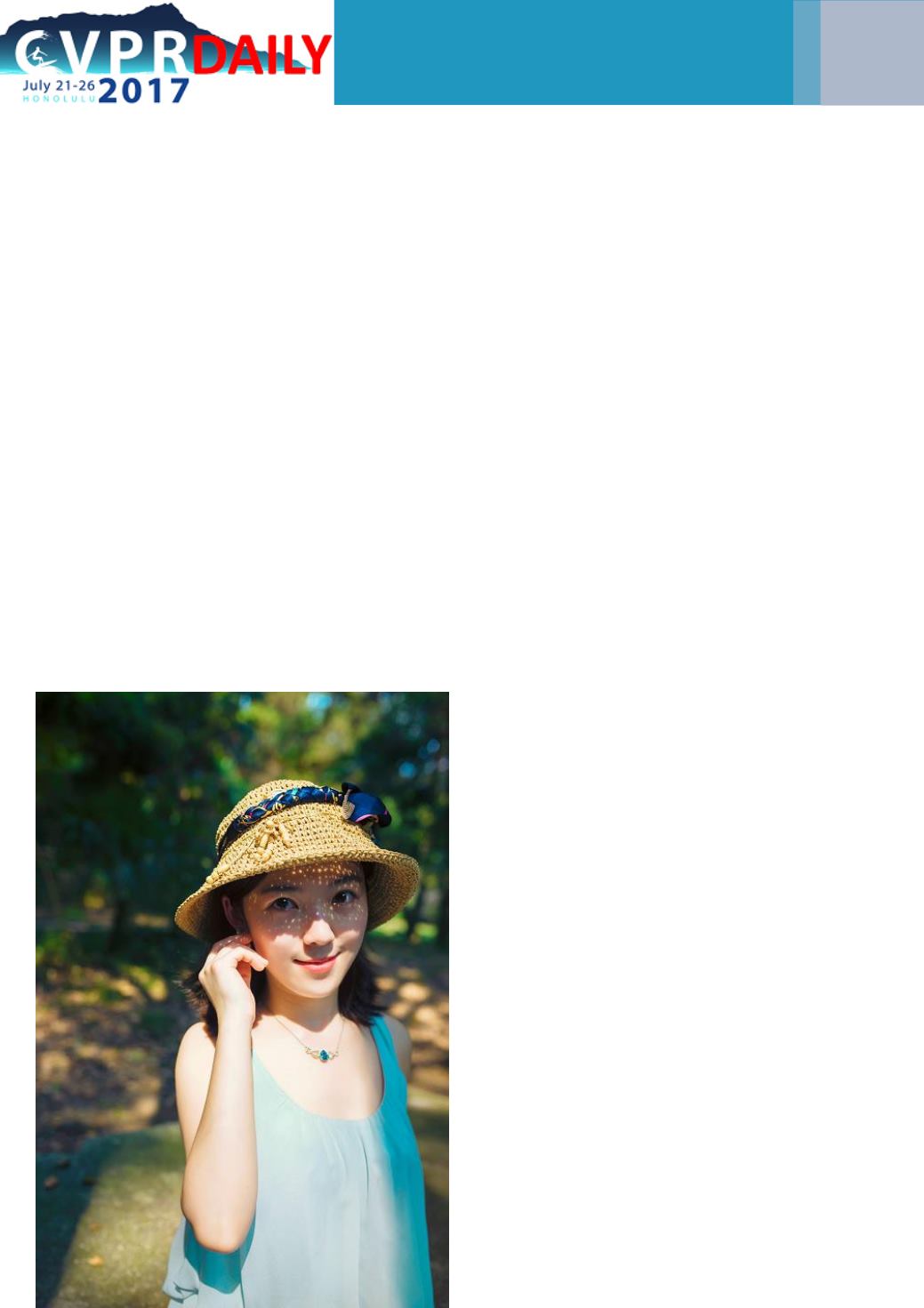
profile of human culture. For example,
my specific research topic is humans’
first impression on each other based on
the visual input. For that, interestingly,
humans share a lot of consensus.
Although you may think first
impressions are a subjective thing,
people agree more or less on who looks
more trustworthy, friendly, intelligent,
and responsible. There are some
common visual factors that drive our
common consensus. Humans still have
slight differences on how they perceive
the world and how they perceive each
other. I would like to know how
demographic and personal experiences
drive those individual differences. I
would like to have an individual model
for everyone in how they understand
the world.
Does your work influence you in such a
way that it changes how you look at
other people? Do you try to
understand how they react to things?
[laughs] Yes - In research, we just fill the
dataset. We show people images of
people, and then we ask them for their
subjective first impression of those
people. In this way, you can collect
people's responses, and you can model
people's average response as a human
population average perception about a
person. You learn the mapping of the
image of the person's average
impression of that photo.
Do you observe how you react when
you meet a person for the first time?
[laughs] That’s interesting! For the first
impression, there's a potential bias in
our perception. For example, people
may associate males with more
leadership or females with family...
these kind of associations. Similarly, we
can observe some sort of trend in your
first impressions. You may feel like a
Caucasian person looks more
trustworthy compared to an African
American. Some people may have those
associations. If we are aware of our
implicit bias, we might be able to fight
against it and be more rational.
Did you see any difference between
genders in their reactions?
This is a very important question. The
first factor you may think about is the
gender difference. For now, we are
using a public dataset collected by a
MIT group. It’s not our own dataset. In
this dataset, we don’t have full access
to the raters, the perceivers, or
demographic information including
gender. From this dataset, we are
unable to answer this question. In the
future, if we are going to build our own
dataset, we will collect every raters on
demographic information. Then we can
answer that.
Monday31
Amanda Song
BEST OF CVPR