Engineering for Annotation in the ML Pipeline | Part 2
Engineering for Annotation in the ML Pipeline, Part 2: Creating Consensus and Quality Control Engineering for Annotation in the ML Pipeline, Part 2: Creating Consensus

Engineering for Annotation in the ML Pipeline, Part 2: Creating Consensus and Quality Control Engineering for Annotation in the ML Pipeline, Part 2: Creating Consensus
Engineering for Annotation in the ML Pipeline, Part 1 Engineering for Annotation in the ML Pipeline, Part 1: Designing a Testable Protocol Author: Eytan Slotnik

Part 4: Validation + Test Making Your Metric Trustworthy (and Your Test Set Worth Something) At some point, your model gets “good enough” that progress
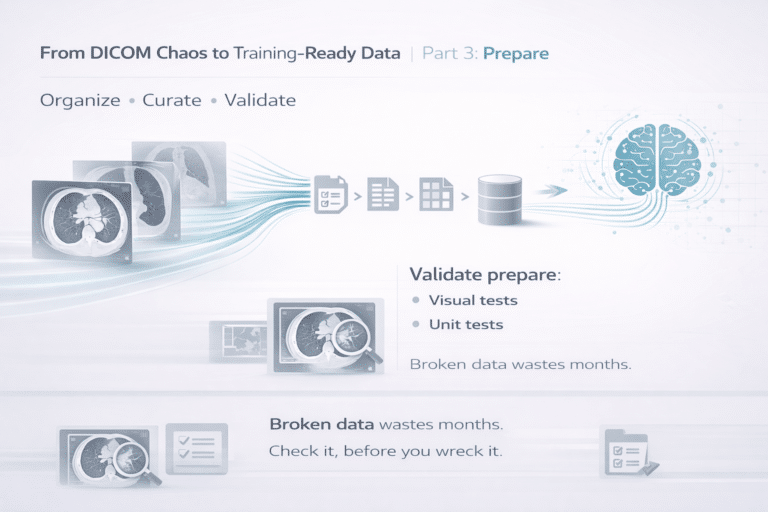
Part 3: Prepare The Step Where “Model Bugs” Are Usually Born Once scans are organized and annotations exist, the temptation is to treat “prepare” as
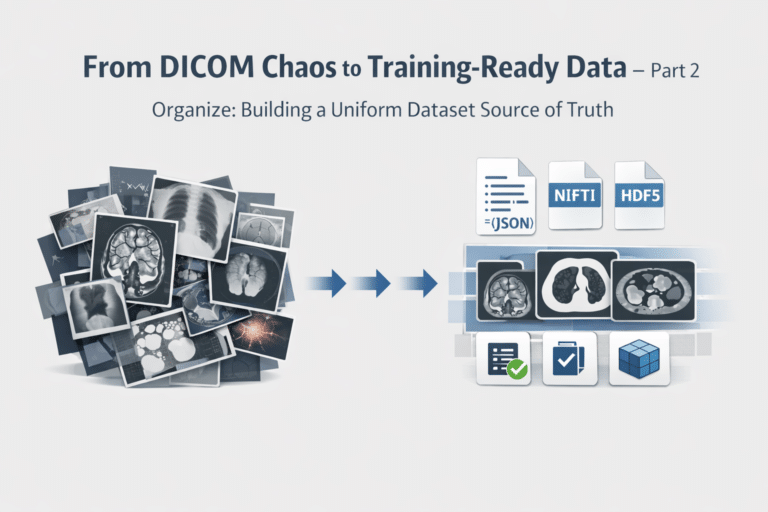
Part 2: Organize Convert Every Dataset Into One Uniform “Source of Truth” The “organize” step is where you take raw datasets from hospitals, scanners, and
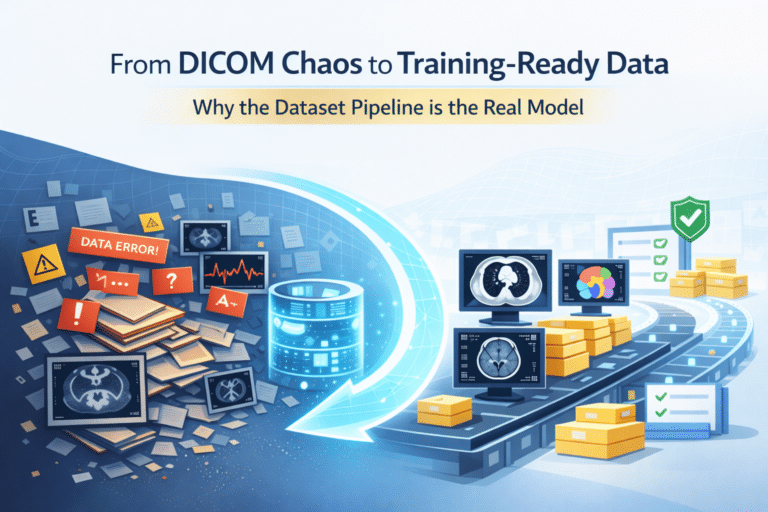
Part 1: Introduction From DICOM Chaos to Training-Ready Data: Why the Dataset Pipeline Is the Real Model If you’re building algorithms in medical AI, you’ve
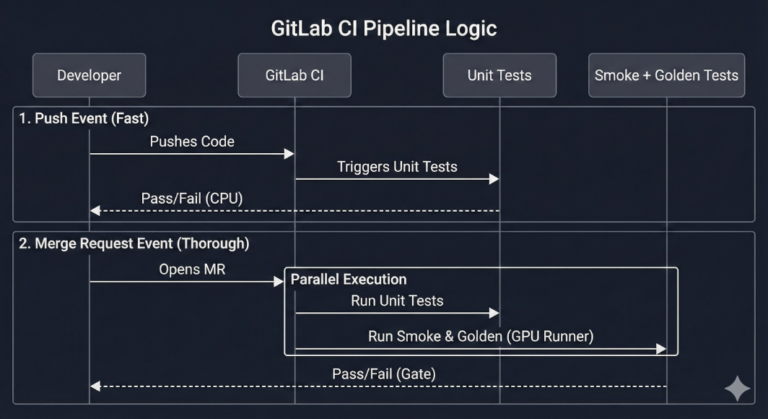
Itai Weiss In Part 1, we introduced a 3-layer testing framework for AI projects: unit tests, smoke tests, and golden set tests. Now let’s look
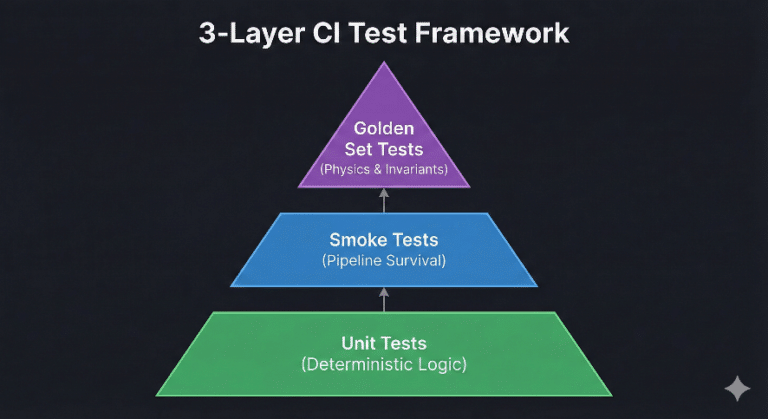
Itai Weiss Continuous Integration (CI) is the practice of automatically testing your code every time you make a change. In traditional software, this works well
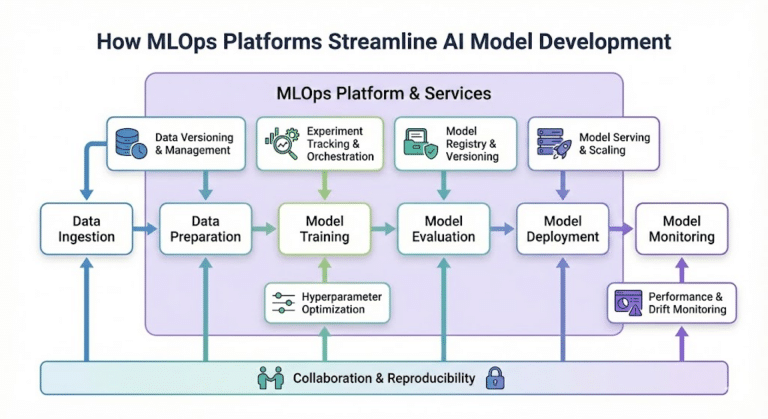
MLOps for AI in Medical Imaging The development of Artificial Intelligence (AI) for medical imaging is a complex task, with unique challenges and stringent
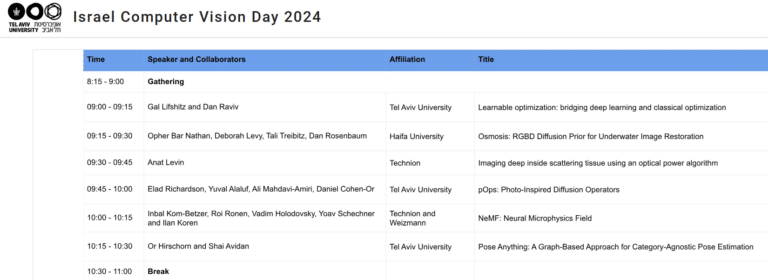
Yesterday our algorithm developers took a break from their regular duties to take part in vision day at Tel-Aviv University. It’s always great to meet our colleagues and